The greatest literary trick ever—
tales of terror that turn into murder mysteries.

They are without exaggeration the most extraordinary tales ever written.
Works that seem to tell one story—usually a tale of terror—but actually hide a different story altogether: a solvable murder mystery.
Read by countless millions, these famous tales—“The Black Cat,” “The Fall of the House of Usher,” “The Tell-Tale Heart,” and others—have fooled us all.
“Seriously?” you will say. “Poe planted secret stories in his tales that nobody ever saw before? How could that possibly be?”
The answer is to be found in an ingenious trick: amazingly clever, but basically simple: their narrators are lying.
The design varies are from tale to tale, but essentially it works like this:
- A man tells a story in which some extraordinary event is said to take place. His sister comes back from the dead (“The Fall of the House of Usher”). Or his first wife (“Ligeia”). Or his cat (“The Black Cat”).
- At some point someone dies. But the narrator doesn’t bother much about that. He sticks to the extraordinary event. How terrifying it was. How incomprehensible.
Readers naturally figure that the story is about the strange event. We have done so for almost 200 years.

But what about that death? The narrator is implicated in it—in every one of these tales. Sometimes he admits killing the victim. Always there are grounds for suspicion.
But Poe’s narrators have gotten a pass. We may have thought they were deluded, but we never once considered that they might be lying.
When we do, the tales morph completely. First, the moment we take the deaths as our starting point, the basic stories the men peddle become wildly untenable.
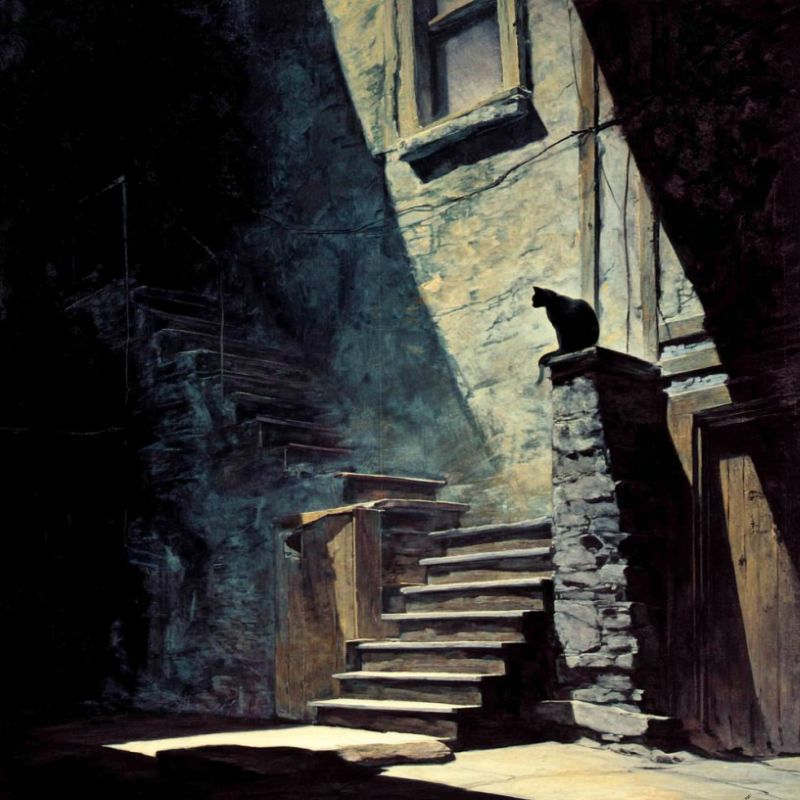
Take “The Black Cat.” The narrator’s story is that he killed his cat. That an exact duplicate cat appeared out of nowhere. That he tried to kill the new cat and accidentally killed his wife instead. Now I ask you.
Take “The Fall of the House of Usher.” A man’s sister dies—from a disease that “baffled the skill of her physicians.” He buries her in his cellar, instead of the family plot. And a week later a mansion that has stood for centuries suddenly collapses in a storm? Come on.
But he wouldn’t face hanging
for accidental homicide.
Never trust a narrator with
a dead body to account for.


The transformation becomes even more amazing when you get down to details. Consider the men’s confusion—the incomprehension they go on and on about. Think of how they waffle and hedge. Can’t remember, can’t be sure. Think of those vague descriptions . . . dubious explanations . . . abrupt changes of subject . . . long digressions . . . sudden outbursts of emotion . . . and outright contradictions.
These features, so familiar to Poe aficionados, are the stuff of Poe’s style. But now we see something else: these are the things liars do.
But they are also tells that we listen for when we think someone may be lying. That point us to the holes in his story, the parts he is covering up.
Once you start looking for them, you see clues everywhere. Some are astonishing: sentences that change their meaning before your eyes. Some hide in such plain sight that when you spot them, you gasp.
As you see their meanings emerge and see how the clues [bit and pieces] fit together to reveal a clear, logical story The combination of incredible ingenuity and utter simplicity is electrifying/gives you goosebumps.
In hindsight, our earlier question mutates: How could this possibly be true? becomes How did we all miss this?!
In the months to come, my blog will tell the whole story, in all its devious detail.
But if you don’t like waiting, you have options:
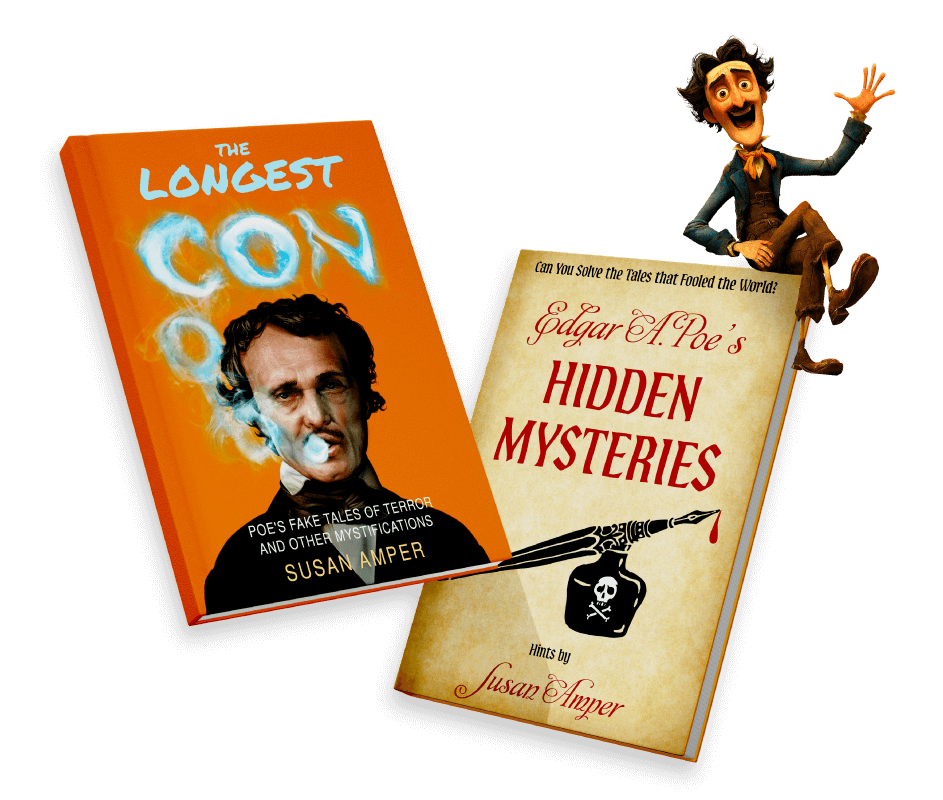
- Read my books, Can You Solve Poe’s Hidden Mysteries and/or The Longest Con: Poe’s Fake Tales-of-Terror and Other Mystifications.
- Get a free copy of chapter 1 of Can You Solve Poe’s Hidden Mysteries. It describes:
- Poe’s method for insinuating the narrators’ cover stories while half-concealing and half-revealing the true one.
- Specific devices—even favorite words and phrases–Poe uses to deke us.
- The best strategies for sussing Poe out.
- Read parts of the story as originally published.
- Journal articles that explain the mystery of “The Black Cat” and “The Assignation.”
- Brief explanations in my posts on Criminal Element:……, if we can direct them to your pieces.
And that’s only half the fakeout. For as wrong as we’ve been about Poe’s most famous works, we’ve been about Poe. A dark, brooding misfit? Hooey. Preoccupied with the “terror of the soul”? Bunk. The truth about Poe—the inveterate trickster—and the way he came to be so misperceived, is an amazing, sometimes hilarious story. To get started, visit the Mystification page.
Poe’s Stealth Mysteries
The Assignation
Ligeia
The Fall of the House of Usher
William Wilson
The Man of the Crowd
A Tale of the Ragged Mountains
The Tell-Tale Heart
The Black Cat
The Oblong Box
The Unparalleled Adventure of One Hans Pfaall

Poe Unmasqued
Two books reveal his long-hidden secrets.